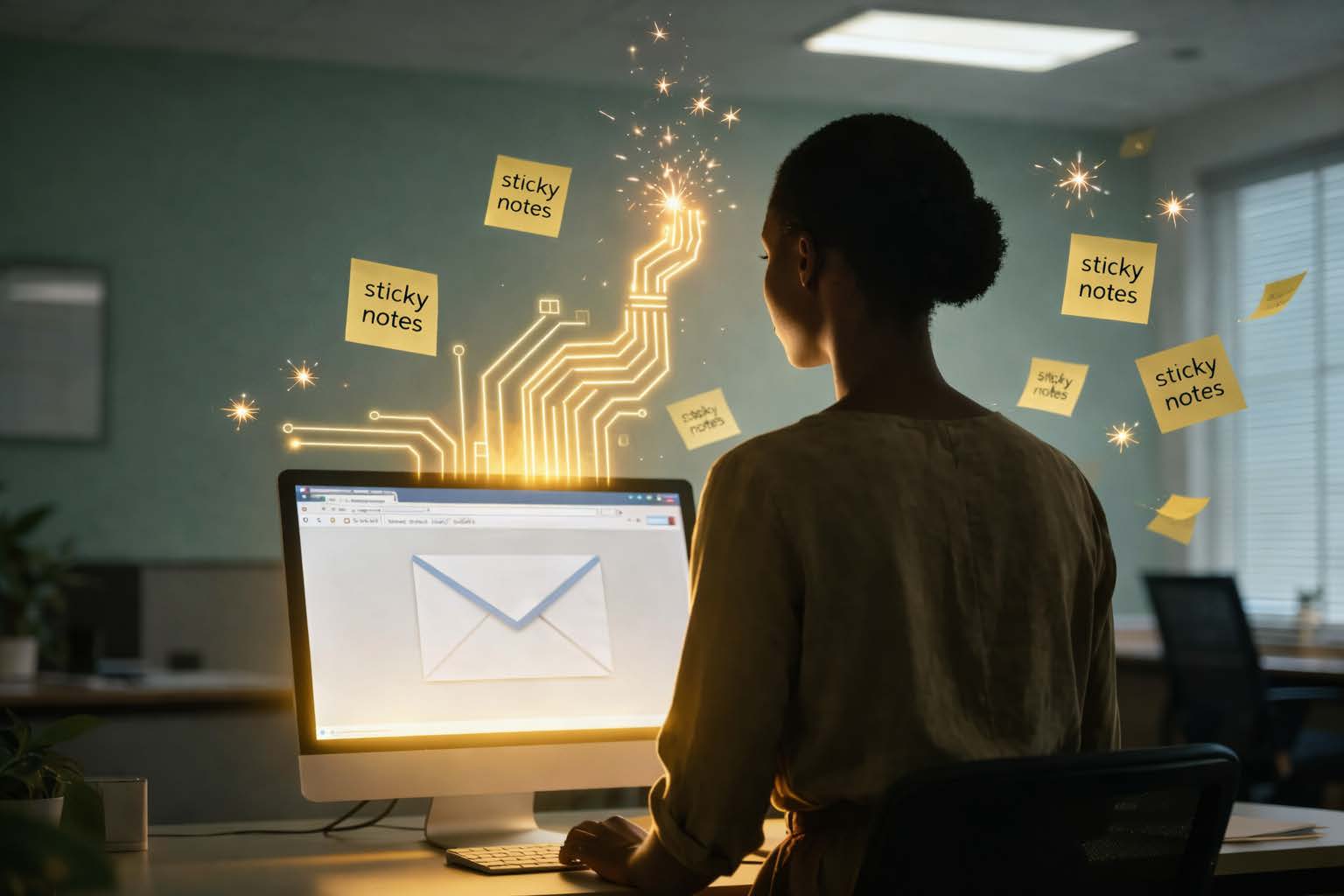
I did not meet artificial intelligence through a robot or some futuristic machine rolling through my office. I met it in the quietest way possible: through an email.
The fluorescent lights hummed overhead as I opened a message announcing a departmental rollout of an AI-integrated HCM system. My stomach dropped. My fingers hovered over the mouse. I reread the words three times, hoping I misunderstood.
I had not.
In that moment, my mind leapt straight to sci-fi scenes and news clips about robots in warehouses. I was not thinking about workflow automation or productivity. I was thinking about being replaced.
And behind that fear of technology was something even heavier: the fear of ageism. The idea that the world was moving forward and I was not moving fast enough to keep up.
For over fifteen years, I have supported CEOs and C-suite executives as an executive assistant. Despite what people think, this work goes far beyond scheduling meetings or sending memos. It requires reading the room with precision, anticipating needs before they surface, and serving as the first point of contact for people who matter. My job has always relied on the kind of human presence no system or software could imitate.
So when AI entered my workplace, I worried. What happens when the world stops valuing the human parts of what I do? What if I get pushed aside for someone younger and more tech-savvy? What if this really is the beginning of the end of my career?
A quiet uneasiness settled into my chest. A mix of anxiety, self-doubt, and the sinking suspicion that I was being left behind.
Looking back, I was not afraid of the system itself. I was afraid of what it symbolized. Losing relevance. Losing my footing. Losing myself.
Research confirms this pattern. Pew reports that a majority of workers worry AI will make their skills obsolete. Studies show that mid-career employees disproportionately fear being overlooked as technology evolves. I felt all of that at once. A blend of professional pride and personal insecurity. And the hardest part was pretending I was not scared.
My moment of shift did not come from my job. It came from a text sent by a friend one ordinary afternoon: a link to a course called Understand and Use AI: ChatGPT with Smart Prompting Tips.
I almost ignored it. I almost let my fear win.
But here is the thing about me. And this has carried me through every hard season. I am not a quitter. Even when I am afraid, even when I doubt myself, there is a part of me that refuses to lay down and give up.
So I clicked on the link.
The course did not talk about AI like a cold system. It talked about it like a tool. Something meant to support humans, not replace them. More importantly, it introduced me to prompting. Suddenly, I saw the connection: I had been prompt engineering my entire career. Executive assistants clarify needs, provide context, interpret information, and refine communication. That is prompting.
For the first time, AI did not feel like a threat. It felt like a collaboration.
I did not overhaul my workflow overnight. I started small. Like dipping a toe into icy water. I asked AI to analyze documents. Then help me reframe emails. Then to help me organize my endless list of ideas.
And those ideas. The digital sticky notes.
I have always kept notes everywhere: on my phone, in my bag, in my head. Ideas for e-books. Outlines for a screenplay I had been daydreaming for years. Product concepts inspired by a doodle my granddaughter drew of me.
For the first time in my life, I was not losing them. AI helped me build them.
It became a quiet partner. Not replacing my voice but amplifying it.
As I gained confidence, something inside me loosened. I was not drowning in tasks anymore. I had room to think, strategize, create, breathe. And little by little, the fear I had been carrying dissolved into something else: Possibility.
I began sharing my excitement with colleagues. Not teaching, simply encouraging. You can absolutely do this, I would say. Let me show you the prompt that helped me. I wanted to create the kind of space I wished I had: judgment-free, welcoming, curious.
Because what I learned is simple: People do not fear AI. They fear being left behind by it.
Most organizations roll out AI tools with training focused on features and functions. They miss the emotional barrier entirely. The employee who has spent decades building expertise now wonders if that expertise still matters. The professional who has always been the go-to person now feels like a beginner again. The person who takes pride in their work suddenly questions their value.
These are not training problems. They are mindset problems. And until organizations address them, adoption will stall.
Now I advocate for what I call AI Onboarding for Everyone. A culture where no one feels too old, too inexperienced, or too overwhelmed to learn. A place where curiosity is encouraged and fear is treated with compassion. I want people to know that AI is not the end of their value. It is the beginning of their expansion.
If someone like me, a woman who once thought AI belonged to gamers and sci-fi movies, could learn it, enjoy it, even thrive with it, then anyone could.
If you are scared, if you are unsure, if you are convinced you are too late, hear me clearly:
You are not behind. You are not replaceable. You are not done.
AI did not make me obsolete. It made me invaluable.
And the future is not waiting for you to catch up. The future is waiting for you to show up. One brave prompt at a time.
The header image for this article was created using AI. One more small example of what becomes possible when you stop fearing the tool and start collaborating with it.