For a long time, I kept asking the same question: What is next?
It sounded ambitious. It felt responsible. It implied momentum.
But eventually, it stopped helping.
That question kept me scanning ahead for clarity, waiting for a signal that would make the path obvious. Instead, it left me suspended. Busy preparing, rarely constructing.
I was not stuck because I lacked ideas or capability. I was stuck because the way I was expected to work felt outdated. Long-handed, inefficient, and disconnected from how my mind actually works.
It was not the work that stopped me. It was knowing I would have to do it the long way, again.
There was a growing gap between what I knew was possible and the processes available to support it. That gap created anxiety. Not from fear of effort, but from knowing a better way had to exist and not having the structure to hold it yet.
The work itself was not hard. The process around it was.
What I once called procrastination was not avoidance. It was pattern recognition.
Each pause was information. My mind was flagging friction before I had language for it. Systems that demanded effort without intention. Repetition without refinement.
I was not resisting the work. I was resisting poorly designed processes.
Once I understood that, procrastination stopped feeling like a flaw and started functioning as a signal: This needs a better design.
The realization did not arrive dramatically. It showed up as a pattern I could not ignore.
Every time a creative idea surfaced, especially the ones that felt like true brainchildren, I felt the same internal stall. The idea energized me. But the moment I imagined forcing it through outdated workflows, the momentum disappeared.
These were not casual ideas. They were creative concepts that needed space to evolve, not systems that rushed them into submission.
The issue was not motivation. It was architecture.
At first, the shift was gentle. I did not set out to redesign how I worked. I simply paid attention. Where energy flowed. Where it stalled. Where curiosity stayed alive and where pressure shut it down.
Urgency softened. Possibility expanded.
Designing was not a strategy yet. It was instinct.
But as ideas accumulated, structure emerged. Patterns revealed themselves. I could see where intentional systems would protect creativity instead of constraining it. Where alignment could finally translate effort into momentum.
That is when the shift became deliberate.
Design stopped being a reaction to frustration and became a conscious act of creation. Each workflow, each framework, each refinement felt less like productivity and more like composition.
The process itself became a work of art.
I was not asking what is next anymore. I was building the conditions for what wanted to exist.
That is when the real work began.
I invested in learning generative AI properly. Not as a shortcut, but as a collaborator. I took formal courses. I studied fundamentals, prompting, integration, and applied use cases. Then I spent countless late nights working across multiple AI environments. Testing, comparing, and cross-referencing ideas.
I moved the same questions through different systems. I stress-tested assumptions. I refined language. I challenged structure. I iterated relentlessly.
Ideas were not treated as precious. They were treated as material.
Drafts were built, dismantled, rebuilt. Concepts were examined for clarity, longevity, and viability. AI helped surface blind spots and sharpen thinking. But final decisions stayed human.
This was not experimentation for novelty. It was design.
Over time, scattered thoughts became complete, viable projects. Not because AI created them, but because it accelerated the invisible work: refinement, comparison, coherence, and confirmation.
AI did not initiate the shift. It responded to it. It was not the catalyst. It was confirmation.
After that shift, my inner world felt wide open and endless.
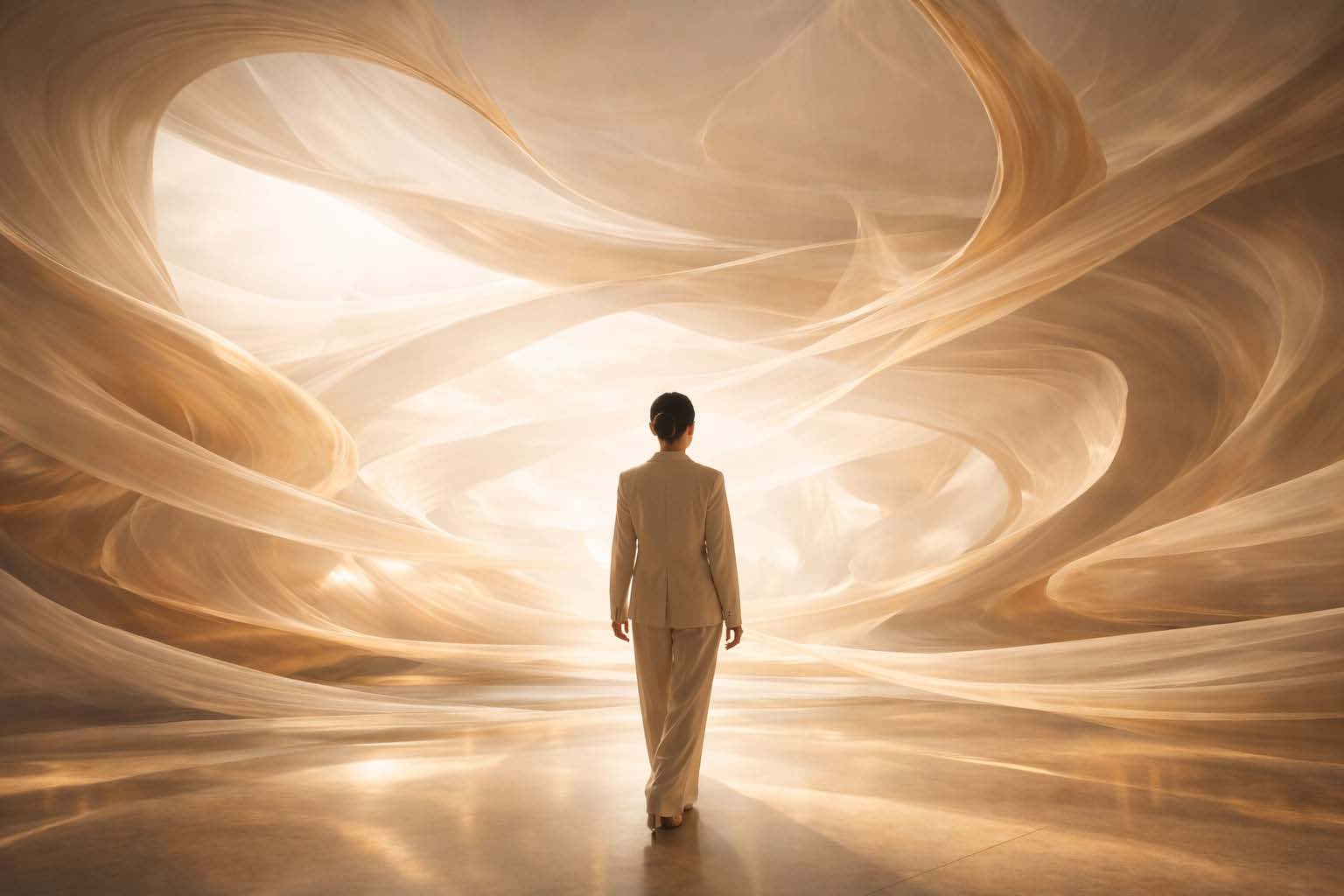
Possibility no longer appeared as a single path. It arrived as everything at once. Light, space, movement, and form. Ideas moved. They pressed forward. They insisted on structure.
This was not chaos. It was coherence catching up to capacity.
Alignment came first. The tools followed.
Somewhere along the way, without announcing it, I became a designer of possibilities.
What would change if you stopped asking what is next and started designing what fits?
The header image for this article was created using AI. One more example of what becomes possible when you stop waiting for the right tools and start building with the ones you have.