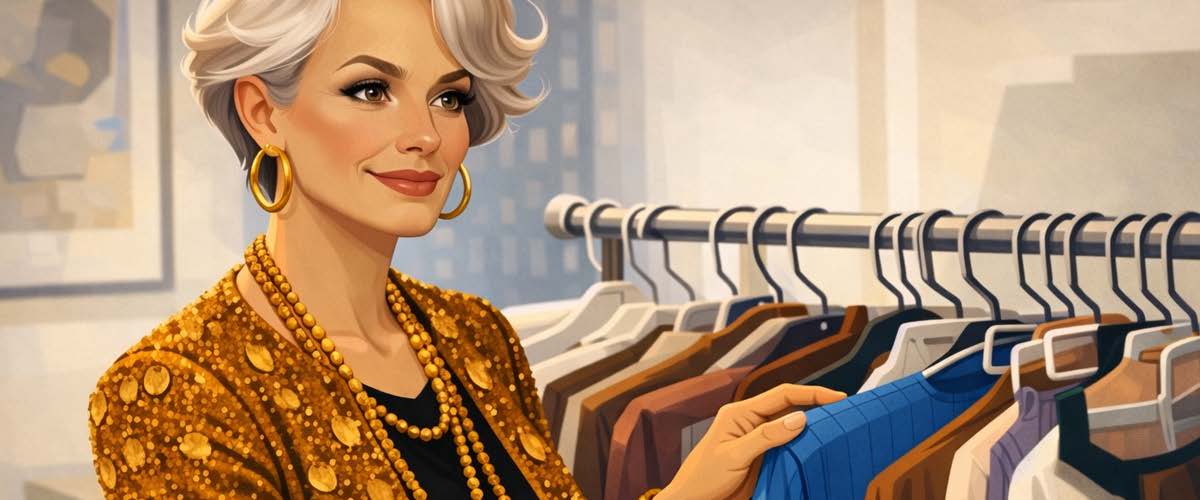
There is a scene in The Devil Wears Prada where Miranda Priestly dismantles Andy in about forty seconds. Andy smirks at a fashion choice she thinks is trivial. Miranda corrects her.
The blue of your sweater was not chosen by you. It was chosen years ago by people in rooms you will never enter. It moved through runways, boardrooms, buyers, and department stores before it reached the clearance rack where you found it and called it yours.
Andy thought she opted out of the system. She did not. She was the last stop on a chain of decisions made without her.
I think about this scene a lot. Not because of fashion. Because of AI.
Mid-career professionals keep telling me they feel behind. They say AI belongs to younger people. To engineers. To the ones who grew up with it. They describe it as optional, something they will get to eventually, once things settle down and someone explains it in a way that makes sense.
But AI is not waiting for anyone to feel ready. It is already inside the systems they use every day. It is shaping how work gets assigned, how candidates get screened, how emails get prioritized, how decisions get made before a human even sees the options. It moved through research labs and venture capital and enterprise software before it reached the tools sitting on their desks.
They are already wearing the cerulean sweater. They just got it from the clearance rack instead of the runway.
And that gap, between where the decisions were made and where the impact lands, is where the shame lives. It is not shame about technology. It is the feeling of receiving something everyone else seems to understand, without ever being invited into the room where it was decided.
This is the part nobody says out loud. The discomfort is not about capability. It is about position. About being downstream in a system designed upstream. About knowing, somewhere beneath the surface, the thing you are using was never designed with you in mind.
Miranda understood this. The entire point of her speech was not cruelty. It was clarity. She was telling Andy: you are inside the system whether you acknowledge it or not. The only question is whether you understand your position in it.
Most AI adoption programs skip this entirely. They hand people the tools and say learn. They schedule the training and say attend. They track the completion rates and say success. But nobody addresses the position. Nobody names it: the person sitting in the training was never part of the design conversation. Nobody acknowledges the discomfort is not about the software. It is about being handed something and told to be grateful for access you never asked for.
That is Quiet Technophobia™. Not fear of the tool. Fear of the position. The feeling of being last in a chain of decisions shaping your career whether you participate or not.
I built PRONOIA because I recognized myself in Andy. Not in her smirk. In her silence after Miranda finished speaking. The moment where she realized she was inside something she did not understand, and the only way forward was to stop pretending she was outside of it.
The clearance rack is not the problem. The problem is believing the clearance rack is where you belong.
AI is here. It is shaping your work, your industry, your role. You did not choose to be part of this system. But you are in it. The question is not whether to start. The question is whether you keep receiving what others decided for you, or whether you walk into the room where the decisions are being made.
Miranda would tell you to stop smirking and pay attention.
I am telling you something different. You already know more than you think. And the room is not as closed as it looks.
That's all.